Showing posts with label alzheimer's disease. Show all posts
Thursday, February 27, 2014
Watch Seth Rogen's Senate Testimony For Alzheimer's Awareness
It is nice to see Mr.Rogen use his fame and personal experience to bring desperately needed attention AND FUNDING to this tragic disease. Kudos.
Monday, February 24, 2014
The Truman Show
'What if everything you knew to be true turned out to be a lie?'
Such was the question that the movie The Truman Show posed. In the film, the main character lives in a completely fabricated reality. Everything from the relationships he shares to the experiences he has are elaborately scripted and engineered products intended to please a watching television audience. Truman's entire life is lived inside the bubble of a giant dome which houses his "town." His friends, his family, even his wife are all actors, paid to play their part. Ultimately, this ruse is revealed to be nothing more than a cruel ploy to produce a television show. But what if the intentions behind a hoax were more honorable?
In the Netherlands, they have sought to answer that question.
In 2009, Hogeweyk, or Dementiaville as it has become known, opened its doors in the town of Weesp in the Netherlands. A first of its kind Alzheimer's housing concept, Dementiaville creates a world that closely resembles reality but keeps Alzheimer's and dementia patients safe. From the outside, Dementiaville looks like an ordinary town. There are shops, streets, salons, and even restaurants all designed to fabricate a normal life experience. Yet it is a fully enclosed and secure environment for the residents inside.
The living quarters within the village are designed to cater and feel completely normal to persons coming from a wide range of backgrounds. Each apartment is meticulously decorated in specific genres and is occupied by 6-8 persons including plainclothes caretakers who pass as normal residents of the village. A person of means would live in an upscale or "Goois" genre apartment thus making the transition from their authentic lives more amenable. When the resident of that apartment began to need assistance in certain areas of daily life, one of their roommates would be willing to lend a hand. Little would the resident know that their assistance would actually be coming from a qualified caregiver posing as a roommate in order to stave off any appearance of an abnormal existence.
The statistics regarding Alzheimer's and dementia are as staggering as they are tragic. While there are occasionally reports of some new wanderdrug or miracle cure on the horizon, reality for families currently dealing with this tragedy is that there is very little that can be done. Hogeweyk changes that reality. Families are now free to consider a whole new world of possibilities for the people they care most about. It may be a completely fabricated existence but to the residents of Dementiaville, it is home.
Labels:
alzheimer's,
alzheimer's disease,
dementia,
dementiaville,
Hogeweyk,
holland,
netherlands,
secured housing,
secured town,
senior,
Weesp
Friday, January 24, 2014
What To Do When They Don't Know That They Don't Know
Alzheimer's is a dark and cruel disease. It takes from people the one thing that they never consider losing: who they are. For most of our clients battling this disease, the decline is gradual. Over a period of years they become aware that their faculties are failing them more and more frequently. Things they used to know become harder and harder to recall and then vanish completely from their minds. While the toll exacted by this tragic final chapter to some lives' journeys is primarily taken on the life of the patient, the painful difficulties it presents for surrounding loved ones can be equally heartbreaking.
Ronald Reagan once joked about his own diagnosis. "The nice thing about Alzheimer's disease is that you meet so many new friends." This cheerful disposition is not uncommon. For many, the disease begins as nothing more than an increasing forgetfulness; easily to explain and comprehend. For others, there is no awareness of what is happening. These individuals present the greatest challenge to their families in a multitude of ways.
One of our clients who passed away from complications of this disease was a friend of mine. He was a man with an amazing intellect who, to the very end, could recall intricate details of some aspects of his amazing life. However, he couldn't tell you where his wife was. The fact that she died some ten years before was lost to him. Each day he would ask for her. Each day his family was faced with a cruel dilemma. They could either lie to their father or tell him the truth. While telling him the truth seemed to be the right thing to do, doing so meant that he would relive the tragedy of losing his partner of 45 years. Each time he was told was the first time he heard the news. Eventually, his family got into the habit of just telling him that she had gone out to the store and would be back in a few minutes. His memory of her never waited that long.
For an Alzheimer's patient, truth is relative. There is no right or wrong answer. For an Alzheimer's patient, life exists increasingly in the here and now. Our challenge as family members and loved ones is to attempt to join them wherever they are in that journey. We train our caregivers with that goal in mind. The objective of every day is not to bring a client up to speed on current events. We do not seek to heroically pull someone from the jaws of Alzheimer's. Moments of radical clarity will happen occasionally and we celebrate them when they present themselves. But for all the other moments, for the rest of the days, our goal is to figure out where a client is and meet them there.
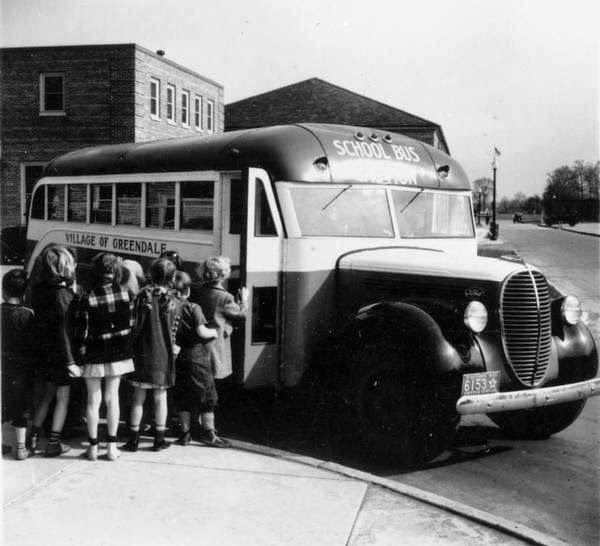
When a 93yr old woman tells me on a cold January morning that she needs to get her shoes on, her lunch packed and her backpack ready so that she doesn't miss the bus to school, my challenge should never be to convince her that the bus is not coming. My challenge should be to figure out how to get on that bus with her, even if only in her mind.
Tuesday, October 22, 2013
Poor Sleep May Increase Risk For Alzheimer's
What happens when we sleep? We dream. We recover. We plan. We rest. During this all important 'down time' our brains and our bodies are flushing out toxins and chemicals in a manner which is impossible while we are awake. This is one reason why people tend to feel lousy if they haven't gotten enough sleep. I can remember my mom insisting that I go to bed early the night before a big test in high school. I didn't appreciate it much then. Nowadays, I would kill for a nap or an early bedtime. George Bernard Shaw was right. "Youth is wasted on the young."
In a recent study at Johns Hopkins Bloomberg School of Public Health in Baltimore, scientists have made some fascinating discoveries regarding sleep and Alzheimer's. One of the brain's critical functions during sleep is to rid itself of toxic chemicals and proteins. One of these toxic proteins, Beta-Amyloid, is the protein which leads to the plaques and tangles of Alzheimer's disease. After studying 70 patients, scientists found that those who slept less or had lesser quality sleep had higher levels of beta-amyloid present in their brains.
Now begins the chicken and the egg conversation. Scientists are not sure whether poor quality sleep is an early indicator of Alzheimer's or whether those people with poor sleep habits are placing themselves at a greater risk of developing Alzheimer's disease. Those studies will almost certainly follow. For now, it should remind us all of the importance of getting a good night's rest.
http://www.dailymail.co.uk/health/article-2470255/Alzheimers-linked-poor-nights-sleep.html
Labels:
alzheimer's,
alzheimer's causes,
alzheimer's disease,
alzheimer's study,
baltimore alzheimer's study,
beta-amyloid,
dementia,
Dr. Adam Spira,
insomnia,
johns hopkins,
sleep,
sleep deprivation,
sleep study
Subscribe to:
Posts (Atom)