Friday, May 23, 2014

'Smart-Spoon' Makes Miracles Happen For Parkinson's Sufferers


Perhaps the most commonly recognizable symptoms for people with Parkinson's disease are tremors. These frustratingly sporadic movements make life's most simple tasks difficult. I have memories of the way my grandmother's hand used to shake when she attempted to lift a coffee cup to her mouth during breakfast.

For many, these tremors are more than just embarrassing. The tasks of personal grooming and feeding oneself can become virtually impossible in some of the more severe cases.

Enter Liftlabs.

Liftlabs is a San Fransisco based company which has developed a remarkable new device to assist people with Parkinson's or any other tremor inducing conditions. While the concept may not be new, the application is revolutionary. Consider that most newer digital cameras are equipped with motion cancelling technology; microprocessors which detect and counter any movements by the picture taker in order to capture a clear image. Liftware is similar device which applies the same idea to a more commonly used daily apparatus- a spoon. When using a Liftware spoon, patients who would normally toss their food all over the plate and table are now able to bring the food successfully to their mouths.


http://www.voanews.com/media/video/1830213.html

To read the entire story click here.

To learn about how Home Instead Senior Care is able to assist the senior in your life click here.

Tuesday, May 20, 2014

The Top Five Regrets of the Dying

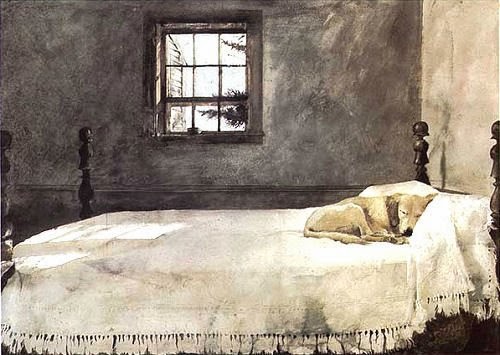
http://aprillindnerwrites.blogspot.com/2013/09/golden-retrievals-dog-hospice-and-poem.html


"Most men lead lives of quiet desperation and go to their graves with the song still in them."
-Henry David Thoreau, Civil Disobedience and Other Essays

For most, there is still an opportunity to live a life of purpose. It is no small task to be continually intentional regarding who you are and what you were created to do with your life. Life has a not-so-funny way of throwing distractions into your field of vision which, while they may be good and worthwhile things, may nudge you slightly off course at critical moments. 

I often think of the movie Far and Away. The main character, a poor Irish tenant farmer, comes to America with dreams of owning his own plot of land. Like so many of us, along the way he loses track of the dream that drove him to the land of opportunity in the first place. While riding a train back east, he spots a caravan of settlers heading west. As if awakened from a sleep, he grabs his belongings and leaps from the train to join them. His fellows on the train call after him- "Mick! Mick! Where are you going?!" "I was on the wrong road," he answers back.

Unfortunately, many will reach the end of their journey with heavy regrets that they no longer have the time to correct. It is helpful to hear some of them as a cautionary tale. On my final day, I hope to be able to echo the words of the Apostle Paul who declared:" I have fought the good fight. I have finished the race. I have kept the faith."(2 Tim4:7)

Here are the top five regrets of the dying as recorded by Bonnie Ware in her new book, The Top 5 Regrets of the Dying: A Life Transformed by the Dearly Departing.

1. I wish I'd had the courage to live a life true to myself, not the life others expected of me.

How many of us have fallen into this trap? It is easy to conform to the expectations of those who care the most about us but ultimately, it is not their life to live. Make it your own.

2. I wish I hadn’t worked so hard.

This regret was shared by an overwhelming number of male patients during their final moments. Go home and through the ball with your kids.


3. I wish I’d had the courage to express my feelings.

Bottling up emotions is not a new art form. The results of hiding your thoughts and feelings are well documented on every possible level: physical, mental, and emotional. In the words of Elsa, let it go.

4. I wish I had stayed in touch with my friends.

Creating true community is a VERY intentional task. As lives get busier, carving out time for the people in your life that matter is not automatic. How many of us have people on our list that 'we just lost touch with somehow?'

5. I wish that I had let myself be happier.

Perhaps the most surprising of the top five, this is not an easy fix. Happiness and joy are choices that we make throughout our lives despite our circumstances. It is far easier to become mired in whatever difficulty we are currently facing than to celebrate all of the remarkable aspects of the life we have been given along the way.
So....


For more information about the way Home Instead Senior Care can help your loved one live the life of their dreams visit www.homeinstead.com/106.

Wednesday, May 7, 2014

"Franken-mouse" Experiment May Hold Keys To The Fountain of Youth


I really wonder where some of these studies start.

Recently, scientists have discovered that injecting old mice with blood from young mice reverses some of the effects of the aging process.

"Old mice who were injected with the protein or who received a blood transfusion navigated mazes faster and ran longer on treadmills. They easily outperformed their control peers, who were given only saline."

The other side of that coin was the polar opposite scenario. Young mice injected with the blood of old mice showed signs of premature aging.

Beyond the obvious hopes and implications of these discoveries is the bizarre genesis of this experiment. Scientists first conjoined an older mouse with a younger mouse to study the effects of sharing a blood supply. Let me put that another way. Scientists stitched two mice together to see what would happen. Bueller? Bueller?

The Stanford scientists who conducted the "Franken-mouse" experiment said that the young mice used were the human equivalent of people in their 20's. I suppose they were able to make that assumption by observing the mice's poor taste in music, regrettable dating choices, and seemingly fearless approach to dangerous situations...like being stitched to another mouse.

http://fineartamerica.com/featured/frankenmouse-marita-mcveigh.html
I digress.

There are a multitude of systems within the human body which breakdown as a result of the aging process. Cognitive ability, organ function, stem-cell activity and the ability to fend off diseases are just a few of the questions to which scientists are hoping to find an answer during the human trial portion of this study; a trial which they hope will begin immediately.

To read the entire article regarding this study, click here.

For more information on what Home Instead Senior Care is doing to change the face of aging in Chapel Hill, click here.

Tuesday, April 15, 2014

An Inspiration To All People


There are about a zillion and a half live TV talent competitions. Dancing With The Stars, So You Think You Can Dance, American Idol, The Next Food Network Star, Design Star, Project Runway, Chopped, America's Next Top Model, X Factor, The Singing Bee, The Voice, America's Got Talent, Britain's Got Talent, Poland's Got Talent, Arab's Got Talent, Holland's Got Talent, Got Talent France, and Russia's Got Talent (although the legitimacy of their voting results is often questioned).

With so many different opportunities for people to show their "gifts" to the world, I am not often taken by surprise.

The video below took me by surprise.


After her performance,  one of the judges remarked that she was "an inspiration to old people." I disagree. She is an inspiration to ALL people.

It is never too late to live your dreams and THAT is what Home Instead Senior Care is all about.

For more information on Home Instead Senior Care in Chapel Hill and the way in which we support seniors and their dreams click here.

Thursday, April 10, 2014

The Driving Dilemma


It is an issue with which we are very familiar. It is a question which has driven a wedge between families. It is a fear which resonates with almost every senior.

Many adult children believe that their elderly parents shouldn't be behind the wheel any longer.

Just yesterday, I was sitting at a stop light when a seemingly driverless car crept across the intersection. After rubbing my eyes, I spotted a tuft of silvery white hair behind the steering wheel. Given the length of the hood on her 1987 Chevrolet Caprice Classic and the easily-apparent-from-across-the-street thickness of her glasses, it is beyond comprehension to expect that she was able to see what she needed to operate a vehicle of that magnitude; or a vehicle of any magnitude.

I did what most of us have probably done in that situation. I said a quick prayer, switched my blinker from left to right, and turned the other way.

The independence that driving represents is something woven deeply within the fabric of each of our beings. It is a topic which we are reticent to broach with those we care the most about because we know that driving is the 'Ark of the Covenant' of senior independence.

To be fair, I find myself more frequently infuriated by teenagers and college students who are entranced by their smartphones while driving than I find myself concerned for senior drivers. Maybe we should start by taking THEIR licenses away and THEN worry about the grey headed road warriors.

The decision to take away a senior's license or even to begin to have conversations to that effect is a difficult one to make. It is important to remember the emotional impact which will be felt by the aging parent.

If you are struggling with how to have "the talk" with your aging parents, check out our website for some great, free resources.

http://www.homeinstead.com/106/RESOURCES/Pages/SeniorCareResources.aspx

This brief video is an accurate picture of the way many seniors feel when their well meaning children take away their independence.

"I was heartbroken. It made me feel old. It made me feel useless."


Thursday, April 3, 2014

Short Naps Boost Productivity and Lower Risk of Heart Attack


In a house with small children, naptime is war. One side of the battle is firmly entrenched and unwilling to concede. They shout and yell and have even resulted in kicking and stomping their feet on occasion. And that's just the parents. The all too obvious irony in this ubiquitous battle for the sanity of our afternoons is that the people being forced to take naps would avoid them like the plague if given the chance while the nap enforcers (a.k.a. Mom and Dad) would cut off all of their fingers and potentially even an entire arm for the opportunity to sleep during the day.

In stark contrast, everyday I hear the commercials for "5 Hour Energy Drink." The attractive sounding voice on the radio encourages us all to fight back against that dreaded '2:30 feeling' by drinking their product. It is apparently packed with B-vitamins to give us all the energy we need to power through the day. Right. And Frosted Flakes are the cornerstone of a healthy breakfast. Tell me another one.

The idea of an afternoon nap is not a new concept. Even as far back as the middle ages, Roman Emperor Charlemagne is recorded by Einhard to have enjoyed an afternoon nap."In summer, after his midday meal, he would eat some fruit and take another drink; then he would remove his shoes and undress completely, just as he did at night, and rest for two or three hours." When in Rome...

European cultures have kept alive this beautiful tradition in a concept known most commonly as "siesta." During the heat of the day, people in certain countries enjoy a long lunch hour which provides them enough time to take a brief nap if they so desire. Our American-ness may urge us to look down our highly productive and driven noses at those self absorbed Europeans who waste time napping during the day but that there are significant health benefits to this ancient ritual.

Studies have shown that a 10-20 minute power nap can give you just what the doctor ordered to 'power through your afternoon.' A nap of that length can increase mental alertness and clarity with minimal grogginess. Buyer beware: sleeping past the 20 minute mark will leave you wanting more and will frequently place you in an even groggier state. One suggestion is not to fully recline while enjoying your afternoon nap. This will help prevent you from falling into a much deeper sleep.

Companies such as Google and Apple have recognized this and are some of the more high profile outfits to allow employee naps as part of their work day philosophy.


Increased mental alertness and clarity can potentially be a tough sell to your slave-driver of a boss. So try this one on for size.

Studies have additionally shown that napping decreases your risk of dying of heart disease. In a huge study of 23,000 Greek adults, it was found that people who regularly took midday naps were more than 30% less likely to die from heart disease.

So the next time your boss catches you snoozing at your desk, tell him that you are working to increase your alertness and clarity. If he still isn't buying it, then tell him you might die if you don't nap and send him the link to this blog.


Wednesday, April 2, 2014

Study Shows That Being Bilingual Delays The Onset of Dementia


http://www.medicalobserver.com.au/news/speaking-two-languages-may-delay-dementia-onset

In one of the largest studies of its kind, scientists have concluded that being bilingual can delay the onset of several different types of dementia by an average of four and a half years.

The benefits of speaking two languages is not a new concept. The collective benefits of bilingualism are described as "an improved executive function." Broken down, those functions include: memory, focus, planning, and problem solving. The study shows that the benefits apply to many types of dementia including Alzheimer's, vascular dementia, and frontotemporal dementia.

The study, published in the journal Neurology, was conducted in Hyderabad, India and included 648 patients from a local hospital memory clinic. Many feel that conducting the study in Hyderabad lends tremendous credibility to the results. That particular region of India is a cultural melting pot where many different languages are spoken. All of the subjects of the study would have been surrounded by different languages their entire lives with some choosing to work towards fluency. It was the fluency that made the difference.

The authors of the study explain that "the constant need of a bilingual person to selectively activate one language and suppress the other is thought to lead to a better development of executive functions and attentional tasks." In short, having to choose between two languages makes our brains stronger.

But before you run out and buy the Rosetta Stone programs for every language from Aari to Zyphe, the study does suggest that there is no apparent benefit to speaking more than two languages. So pick two and stick with 'em!

For more on this study:

http://www.neurology.org/content/early/2013/11/06/01.wnl.0000436620.33155.a4